Showing posts with label science. Show all posts

Monday, March 10, 2014

First Law of Thermodynamics

 The first law of thermodynamics states: energy can be neither created nor destroyed (conservation of energy).  Zippy's science book does a nice job of explaining this with a play doh example.  Using 4 cans of play doh make a world, then you can change it around,  but one is still using the same play doh.  

After she was done reading about this Zippy asked if she could try it.  So she did.  I think she will remember the conservation of energy after this.  That is why I love homeschooling. 

Here is her play doh creation:  


Sunday, November 10, 2013

Apologia Exploring Creation with Chemistry and Physics {A Review}

A homeschool science curriculum that is a great introduction to physics and chemistry.

 photo logo_zpsd1be877b.jpg

Exploring Creation with Chemistry and Physics 


The Essentials - What you need to know

The Review
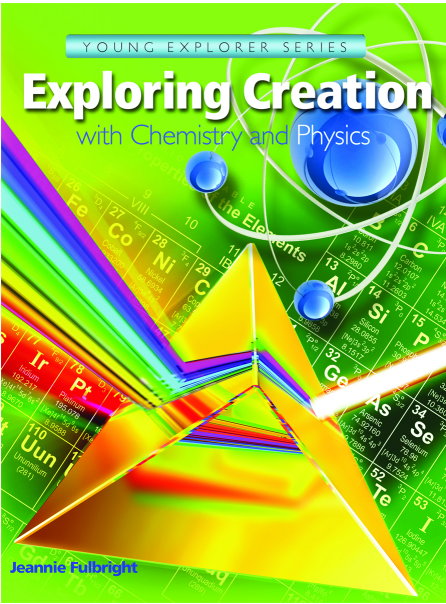
 photo chemistry2_zpsf5580e2f.png Apologia does a fantastic job with their young explorer series of homeschool science curriculum.  Exploring Creation with Chemistry and Physics is no exception.  Written by Jeannie Fulbright, the textbook is comprehensive, yet easy to understand.  Written for elementary students, grades K - 6, I wanted Zippy to use this book because I believe that it will help her achieve a solid introduction to the subjects, before moving on to "real" chemistry and physics in high school in just a few short years.

The books are of the highest quality both in physical appearance and content.  The textbook is a hardbound textbook sized book.  It is well organized with a table of contents, index, answer key and extensive supply list.  As with other Apologia books in the young explorer series there is a through introduction on how to use the book along with the journaling notebook. With these sound instructions, I believe that anyone would feel comfortable teaching science.  The text has fourteen lessons including topics of matter, atoms, compounds, mixtures, simple mechanics, motion, kinetic energy, sound, light, thermal energy, electricity, and magnets.
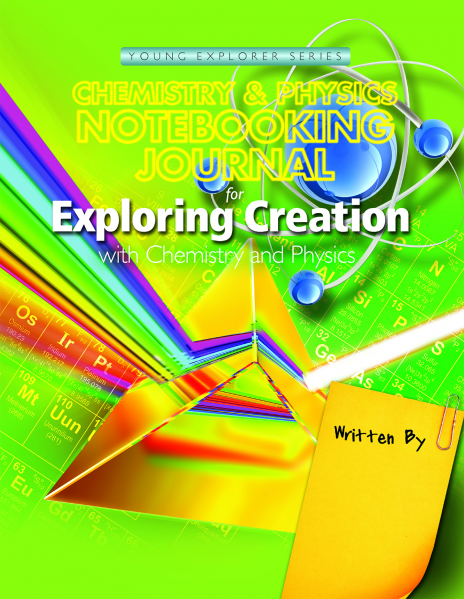
 photo notebookingjournal_zpsaa83790f.png
The methodology of this series is based heavily on the Charlotte Mason approach.  The notebooking journal adds another layer to the learning.  As it says in the Note from the Author at the beginning of the journal,  "It provides a place for students to complete the assignments in the test as well as many optional activities, and will serve as their individual notebook."  Extra extensions to the text include crosswords, copywork, mini books, additional hands on activities, project pages and field trip sheets.

In addition to all the wonderful resources to be found in the text and notebooking journal, Apologia provides a course website with online resources.  One of my personal favorite links is the video showing how to blow a bubble with bubble gum, which is part of an activity in chapter 2.

Zippy is still having a blast working her way through this book.  There is a lot of really information rich text, but there is just as great an amount of trying it out.  More than I
have seen in any of the other young explorer series. So much, in fact, I felt a little overwhelmed. It makes sense that a book about chemistry and physics would have so many actives as these concepts are so well suited to them.  Just think, when we cook we are using chemistry, and that is an activity many do every single day.  Many of the "try this" activities throughout each chapter are simple activities requiring things that are really found around the house and take just a few minutes to complete.  At the end of the chapter, and additionally in the notebooking journal, there are more complex projects.  Zippy's favorite project so far involved playing with density.

Thinking back on my own public school science education, I know that I learned all the concepts in this book, but I learned most of it in high school and college.  This book does not shy away from big information like atoms, the periodic table, even Newton's Laws of Motion.  It shares this big information in such an understandable way, with the help of lots of activities, without sounding patronizing that even a young child would be able to comprehend. The other aspect of this book that I absolutely love, love, love is the Christian worldview.  Science is a beautiful lens that can help us see the hand of the Creator.  There is scripture in the copywork, sprinkled throughout the text, and the author is always careful to give glory to God in her writing.

For the duration of the review period we used. Exploring Creation with Chemistry and Physics as our sole science text.  We tried a couple of different approaches to the activities.  Zippy read through the whole chapter, completing the notebooking activities and end of chapter questions then did the activities.  For a difference chapter she did the activities as she came to them in the chapter.  The second approach probably worked the best, pedagogically speaking.  I would suggest, as a parent, to look ahead, review all the activities, and collect in one spot all the materials necessary for that chapter.  We got hung up a couple of times because of my lack of foresight.  

All in all, I love this book.  It is proving to be the perfect introduction to some complex topics.  By learning these concepts now, I believe it is setting Zippy up to be more successful in science in her higher education.



Photobucket


 photo DisclaimerGraphic1_zpsf612f371.gif

Friday, October 18, 2013

Weekly Round up - with a science field trip

***************Some of the Photos in this post were taken with Instagram**********************
I ♥ Instagram
You can follow me.  I'm hollyoshesky
*******************************************************************************

The Field Trip

One of the things I really appreciate about being involved with Classical Conversations this year is the community of people.  This Tuesday past a group of us went to Cranbrook Institute of Science.  Field trips add a dimension to learning that can't be gained with just books and paper.  I had never been to Cranbrook before and I would recommend it as a field trip for homeschoolers.

We experienced a planetarium show, this was the main focus as we are heading into a section on astronomy, and explored the traveling exhibit of dinosaurs.  A lot of what I know about dinosaurs comes from the PBS show Dinosaur Train.  I felt fairly educated, recognizing lots of the names as we walked through the exhibit.  We also checked out the regular exhibits.  The mineral display was rocking! (I really could not resist the pun).  It is not a big museum, but they pack a lot into a small space.


We found one of our favorite things directly after the planetarium show.  It is a model of the solar system with all the planets and moons made with gears and clockwork.  Around the outside is a clear plastic sphere with some of the constellations on it.  When one pushed a button, the planets and moons would revolve and rotate.


~Holly

{Linking Up}


Homegrown Learners

life rearranged

Friday, September 13, 2013

Weekly Round Up - with the solar system

Here is what is going on in our lives and in our homeschool this week in words and pictures.

*************************************************************

Some of the pictures in this post were taken with Instagram. I love Instagram. Follow me to see more great pics. I'm hollyoshesky.

*************************************************

We had the last of firsts for this school year this week.  Zippy started Classical Conversations.  Classical conversations is really hard to define.  You can check out their website to find out all about it. Essentially they are classical in their approach (so lots of memorization) and they are a community.  There are a few reasons why I thought this outlet would serve our edicational needs this year.  Zippy spent so much time alone last year so I thought it was especially important to get her involved in community.  Classical Conversations meets once a week in a small (like 5 kids) classroom setting, so this is a good way for her to practice her social skills in a rigid environment.  And there is Essentials.  Classical Conversations is divided up into three sections Foundations (grade K4 - 6), Essentials (Grade 4 - 6), and Challenge (Grade 7 - 12).  Zippy is barely too old, but I wanted her to do Essentials because it is the most through English program I have seen. It covers writing and grammar with a little math thrown in.  Sadly Zippy is the only student, but since I signed up to tutor the class it all works out ok.

This week Zippy had a project in Science.  Make the Solar System with balloons.  Fun, fun, fun.  And yes she did include Pluto.  We know Pluto was demoted but Zippy felt sorry for it so she included it. (By the way you can hear a great podcast on Pluto from  Stuff you Missed in History Class. released 7/22/13).

balloon solar system

The Little Dude is also coming along with preschool, but I am giving him his very own round up tomorrow. There is just too much great preschool stuff. Here is a sneak peek:

Preschool preview

I will leave you with a quote and a picture:

Big sisters are the crab grass in the lawn of life ~ Charles M Schulz


brother and sister


{Linking Up}

Homegrown Learners

Tuesday, May 21, 2013

Science Naturally {A Review}

A fun way to fit in science, one minute at a time.
 photo 1100041v1v1_zpsa4dd1c29.jpg

Science Naturally

The Essentials - What you need to know 

One Minute Mysteries: 65 More Short Mysteries You Solve with Science is such a fun book.  It reminds me, in every good way, of the Encyclopedia Brown mysteries I loved as a kid.
 photo MysteriesMoreSciCoverFrontweb_0_zpse15319fb.jpg
This book is a great way to wake up the mind, foster curiosity and promote discussion.  All of the mysteries are a page or less in length with the solution and a photo illustration on the back of the page.  There are a wide variety of science topics including , life, earth, space, general, physical and chemical.  In addition there are five bonus mysteries and five bonus math mysteries.  Each mystery is a mystery first.  What I mean is there is not anything that says "We are going to learn about geysers" but rather the book tells a quick, fun tale of hot hikers and the answers tell why walking in a geyser's mist would not cool them down.  The smaller sized paperback is nice to throw into a bag to take along, whether to the grocery, the beach or on a road trip across the country.

We used this as a warm up to Science, and on a couple of occasions to our day. It was a nice way to limber up the brain.   Zippy would read aloud the mystery then we would take a couple of minutes to discuss how the problem might be solved. The book relies exclusively on prior knowledge. This is fun because all the mysteries are believable real life scenarios. Sometimes Zippy knew the answer straight away because she had the scientific knowledge. One mystery in particular, dealt with whales, a subject she studied in depth earlier in the year. Sometimes she could puzzle out the answer. She would know the how but not the why. Sometimes she did not know the answer at all. There were lots and lots of "I wonder" and "ah ha" moments.

The thing that I personally liked was the good writing and the names. There are so many fabulous and culturally diverse names. One mystery  was about Amir and Hakim. When I was a substitute teacher in the public school I had lots of Amirs in the classroom. This mystery came alive for me because I could picture the boys puzzling through their problem. Zippy even found her brother's name, which was fun.

I would recommend this book to homeschool families of all ages. Not only does this make a nice science time book, but it also is a great jumping off point for some stimulating dinner conversation. I would also recommend this to regular classroom teachers. A minute mystery would be an appropriate jump start for the beginning of class or a time filler at the end of class. I would most especially recommend this for substitute teachers. When I did sub regularly I was always looking for quick, interesting things to with the kids. This book definitely fits that bill.


Photobucket

 photo DisclaimerGraphic1_zpsf612f371.gif

Wednesday, April 3, 2013

A Journey Through Learning {A Review}


A Journey Through Learning: scrapbooking with an educational twist.  
Journey through Learning Logo photo journeythroughlearninglogo_zps21c38856.jpg

A Journey Through Learning

Find out information about A Journey Through Learning and  their lapbooking products on their webpage www.ajourneythroughlearning.net/

Select Products:
We reviewed the Astronomy and Space Unit Study. It was downloaded as a PDF file. The Unit Study was set up as a notebook.  It suggests using a 3 ring binder and details how to organize it.  The study provides reading material, printable notebooking pages, and printable vocabulary pages.  In addition it has several hands on projects, and a suggested book report. Bonus printable pages also include a book log, NICK notes, outline form and what have I learned forms for narration for both big kids and little kids. There is also additional reading suggestions and a bibliography. 

Astronomy and Space photo astronomylapbook_zps68bf09d3.jpeg

How We Used It

I allowed Zippy the choice of which product she wanted to use. She chose the Astronomy and Space Unit Study.  She used it to survey the topic.  Zippy read and completed one section  per day. Usually this entailed reading and filling in a notebook page, but twice there were hands on craft or project.  She completed the whole thing in about a month.  She had an easy time reading the one page of information and completed the accompanying notebooking page independently.  I also intended to use the Letter, Numbers and Shapes lapbook with the Little Dude.  I looked through it thoroughly and realized that while there were some activities that he could do, such as counting, shape recognition and number recognition, the majority of the lapbook, which involved tracing letters and drawing was too advanced for him. 


What we thought of it

I was delighted.  The comprehensiveness and flexibility of this product is excellent.  The topic was covered thoroughly in the reading material so that it can be used as a stand alone unit.  I can also see how this could be used as a jumping off point for a more in depth study, using the bonus printables, additional books and resources.  It could also easily be used as a companion to another curriculum.  I am thinking especially of the studies on the moon, and planets. I asked Zippy what her favorite topic was, it was the phases of the moon.


Photobucket

 photo DisclaimerGraphic1_zpsf612f371.gif

Tuesday, February 12, 2013

Apologia Science {A Review}

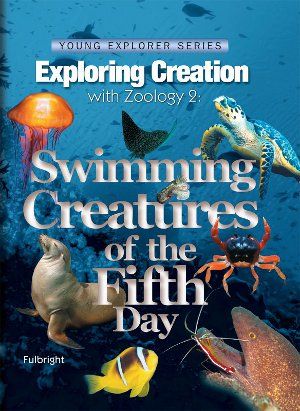
We are reviewing Apologia Exploring Creation with Zoology 2: Swimming Creatures of the Fifth Day textbook and the Zoology 2 Notebooking Journal by Apologia Educational Ministries.  The textbook is $39 and the Notebooking Journal is $24.  You can find more information about all Apologia's products at: www.apologia.com.

I was very impressed with this product from the time I opened the box.  The textbook is a hard bound book with text, color photos and illustrations.  The Notebooking Journal is a high quality spiral bound workbook.

Looking at the introduction pages of the textbook I was blown out of the the water with the thought that went into the curriculum. The book itself is a teacher's tool.  One of the very first things in the book is how to reach Apologia's curriculum support (there are 5 different ways). Then it goes to explain how to use the book.  There is a step-by-step guide, a chapter by chapter supply list, and a website that has even more information, extra blank notebooking pages, videos, and sound clips.  It made me feel like I knew exactly what I was doing right from the start. Organization makes me happy.

According to the Apologia website the books in the elementary science collection are designed for grades K-6.  Even though they are designed for younger students they do not skimp on in depth information.   It is written in a straightforward style with important vocabulary terms in bold face print.  Zippy is in 7th grade technically, but reading slightly below her grade level.  At no point did she feel that the content of the book was babyish, meant for younger children, but it was written in a way that she could understand.   At the end of each chapter there is a big experiment that allows student to follow the scientific method to find out information pertaining to the chapter.  In addition there are smaller "try this" hands on activities throughout the chapter.  The thing I liked best about these hands on activities is they are geared so older students can complete them with minimal parent help, and they use household items.  There is also a continuing/cumulative project.  For Zoology 2 it is an ocean box, a diorama that gets new pieces with each chapter.

The textbook has a strong narration and notebooking component to it.  Narration is where students, after reading a section, orally summarize the information.  Notebooking is where students write down their information and draw a picture or two.  This approach to learning works exceptionally well for us.  The book gives an either/or approach.  You can either do narration or you can do notebooking.  I chose to do both.  This allowed Zippy three chances to go over the information.  With her ADHD the ability to digest the information in many different ways (reading, speaking, writing, drawing) is huge.  She really retained the information, which made for some sparkling dinnertime conversations.

In addition to the textbook, we also reviewed the Zooology 2 Notebooking Journal.   While it is not necessary to have the Notebooking Journal I would highly, highly recommend it.  The beginning of the Journal is as enlightening as the beginning of the textbook.  It gives a suggested weekly/daily schedule.  All the notebooking pages are printed out in order. There are also additional layers of learning, with copywork, vocab crosswords, mini books, and dive deeper, where students are encouraged to explore further an aspect of the chapter, then gives activities and resources to help them accomplish their extra mini-project.

My favorite part of the Notebooking Journal was the suggested schedule.  Having a schedule really took the stress out of planning science for me.  The schedule suggests doing two days of science per week, we do four or five so I just cut each day in half.  Each day we did science Zippy would read, underline the important ideas, narrate and write down in her notebook.  When she reached the hands on activities, she would do them at that time cementing whatever concept she was studying in that section.  Generally she got the whole chapter read in the first week.  The second week she did the Notebooking review, further research, the big experiment and added to the ocean box.

Zippy had a wonderful time doing this science curriculum.  She wants to finish the book and is looking forward every two weeks to adding something new to her ocean box.  I was impressed by the program and intend to purchase the generally science book for Zippy's science studies next year.

Photobucket

Disclaimer:  I received a free copy of this product through the Schoolhouse Review Crew in exchange for my honest review. I was not required to write a positive review nor was I compensated in any other way. All opinions I have expressed are my own or those of my family. I am disclosing this in accordance with the FTC Regulations.

Tuesday, March 15, 2011

Crickets

We are starting a new section in Science.  This year we are working on Life Science and decided to use Creepy Crawlies and the Scientific Method by Sally Stenhouse Kneidel as our guide.


Zippy did not want to do science, at all.  She whined and carried on about how boring, how hard, how much she just didn't want to do it.  This persuaded me that we had to do something really cool and fun. What is more fun than live critters?  This book is all about getting critters from nature to study.  Nature is cheap, that appealed to my frugality. One problem right now though, nature is frozen.  So looking through the book I decided that we could buy either earthworms or crickets. I let Zippy decide, and she chose crickets.

Before we bought the crickets I went over the scientific method with Zippy, which is definitely part of this book.  There was groaning, there were eye rolls, but, in the end she wrote it down.  All the complaining stopped dead it its tracks, though, when the crickets came home.  The husband is now the designated critter controller. We are going to do the science in the evening, because he is just better with handling science-y stuff than I am.

We made our own terrarium from a plastic storage bin with holes drilled in the top and play sand with a total cost at less than $5.00.    The first part of the method is observation.  Zippy and the husband enjoy watching to see what they do.  She is writing down her observations and questions.
 

Next week we will start doing the experiments in the book.  My plan is to have cricket science for about 4 weeks, then I hope it will be warm enough to release them into the wild of the backyard.